



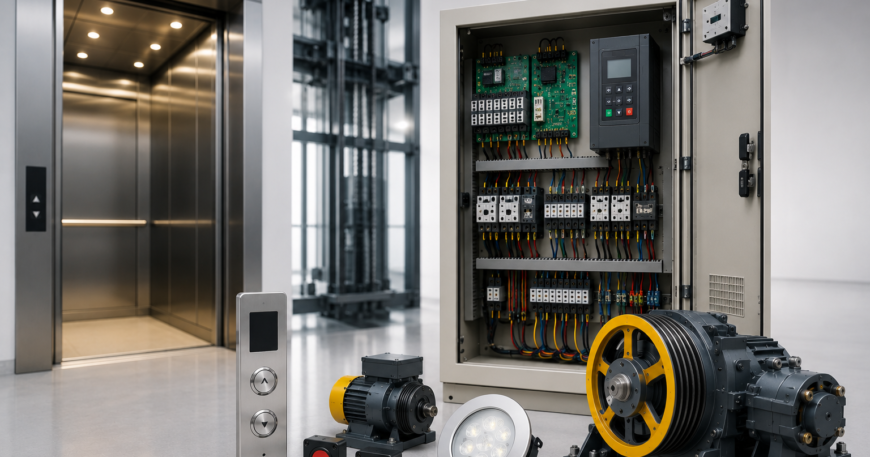
Choosing the right elevator control system is one of the most important decisions when designing, upgrading, or modernizing an elevator. The control system acts as the central intelligence of an elevator, coordinating the motor, drive, doors, sensors, safety circuits, buttons, and other electrical components.
A well-designed elevator control system can help improve ride comfort, operating efficiency, floor-leveling accuracy, reliability, and maintenance. However, not every building requires the same type of control solution.
Residential buildings, commercial offices, hospitals, hotels, shopping centers, and high-rise towers can have very different traffic patterns and performance requirements. Therefore, selecting an elevator controller based only on price or basic specifications may not provide the best long-term solution.
In this guide, we explain the key factors to consider when choosing the right elevator control system for your building.
What Is an Elevator Control System?
An elevator control system is the combination of electronic and electrical components responsible for controlling the operation of an elevator.
The system receives signals from different devices, processes them, and sends commands to the elevator’s motor drive, doors, brakes, indicators, and other equipment.
A typical elevator control system can manage:
- Elevator movement
- Motor speed
- Acceleration and deceleration
- Floor positioning
- Door operation
- Passenger calls
- Safety circuits
- Overload detection
- Emergency functions
- Fault monitoring
- Communication between elevator components
The elevator control panel usually contains the main controller along with relays, contactors, terminals, protection devices, power supplies, and other components required for system operation.
Why Choosing the Right Elevator Control System Matters
The control system has a direct influence on the performance of the complete elevator.
An appropriately designed system can provide smoother movement, accurate stopping, efficient motor operation, and better coordination between elevator components.
On the other hand, a poorly matched control system can create problems such as inconsistent floor leveling, uncomfortable acceleration, unnecessary energy consumption, difficult troubleshooting, and increased maintenance requirements.
For this reason, elevator control selection should be considered during the early stages of a building project.
1. Consider the Building Type
The first step is to understand what type of building the elevator will serve.
Different buildings have different passenger requirements.
Residential Buildings
Residential elevators generally experience predictable traffic patterns, although usage can increase during morning and evening periods.
A reliable and cost-effective elevator control system with appropriate safety and comfort features may be suitable for many residential applications.
Commercial Buildings
Office buildings can experience heavy traffic during specific periods of the day.
A suitable control system should be capable of efficiently managing frequent passenger calls and coordinating elevator movement to reduce unnecessary waiting.
Hospitals
Hospitals can have demanding elevator requirements because elevators may be used continuously for patients, staff, equipment, and emergency movement.
Smooth operation, reliability, accessibility, and appropriate control functionality are especially important.
Hotels and Shopping Centers
Hotels, malls, and similar properties can experience changing traffic throughout the day.
The elevator control system should be selected according to expected passenger volume, building layout, and operating patterns.
High-Rise Buildings
High-rise buildings often require higher travel speeds, precise positioning, efficient traffic management, and advanced drive technology.
A high-performance elevator control system should be capable of coordinating the motor, drive, feedback devices, safety systems, and other components effectively.
2. Evaluate Elevator Capacity
Elevator capacity is another important consideration.
The control system must be compatible with the elevator’s rated load and motor specifications.
Passenger elevators may have different load capacities depending on the building and application.
When selecting a controller, consider:
- Rated elevator load
- Motor power
- Number of passengers
- Travel distance
- Elevator speed
- Duty cycle
- Operating frequency
The controller and drive should be appropriately matched with the motor and mechanical system.
3. Consider Elevator Speed Requirements
Elevator speed directly influences the type of control technology required.
Low-rise buildings may not require high-speed operation, while high-rise buildings can require significantly faster travel.
A modern elevator drive system allows precise control over motor speed, acceleration, and deceleration.
Variable Frequency Drive (VFD) technology can help provide smooth speed transitions and accurate floor stopping.
The selected controller should therefore be compatible with the required motor and drive configuration.
4. Choose Between Geared and Gearless Applications
The elevator machine is another factor that affects control-system selection.
Geared Elevators
Geared elevator systems use a gearbox between the motor and traction sheave. They are commonly used in many low- and mid-rise applications.
The control system must be properly matched to the geared motor and drive.
Gearless Elevators
Gearless elevators use a direct-drive traction machine without a traditional gearbox.
They are commonly used for high-rise and higher-performance applications.
Gearless systems can benefit from advanced motor-control technology that provides precise speed and torque management.
The elevator controller should therefore be selected according to the specific geared or gearless machine being used.
5. Look for Smooth Acceleration and Deceleration
Passenger comfort is one of the most noticeable results of a good elevator control system.
Passengers should experience a smooth transition when the elevator starts, accelerates, slows down, and stops.
A modern controller working with a suitable VFD can create controlled acceleration and deceleration profiles.
This helps reduce sudden changes in movement and can contribute to a more comfortable ride.
6. Consider Floor-Leveling Accuracy
Accurate floor leveling is important for passenger safety, accessibility, and overall elevator performance.
The control system uses information from position sensors, encoders, or other feedback devices to determine the elevator’s location.
As the elevator approaches the destination floor, the controller communicates with the drive to reduce speed and bring the elevator to the required stopping position.
When selecting an elevator controller, make sure the system supports the required position-feedback and leveling configuration.
7. Check Safety and Protection Features
Safety should always be a primary consideration when choosing an elevator control system.
The controller needs to work with the elevator’s safety circuits and related devices.
Depending on the elevator design, these can include:
- Door interlocks
- Emergency stop circuits
- Limit switches
- Overspeed-related systems
- Brake monitoring
- Door sensors
- Position sensors
- Safety relays
- Load monitoring
The exact safety architecture depends on the elevator design and applicable regulations.
A control system should be selected and installed by qualified elevator professionals according to the relevant requirements.
8. Consider Energy Efficiency
Energy efficiency is increasingly important for modern buildings.
The elevator control system works together with the motor and drive to manage energy consumption during operation.
Modern VFD-based systems can adjust motor operation according to the elevator’s movement requirements.
For high-traffic buildings, regenerative drive technology may also be considered where appropriate.
Regenerative systems can recover some energy during certain braking conditions and return it to the building’s electrical system, depending on the system design.
9. Evaluate Maintenance and Troubleshooting
An elevator control system should not only perform well—it should also be practical to maintain.
Look for systems that provide clear fault information, accessible components, organized wiring, and useful diagnostic functions.
An organized elevator control panel can make it easier for technicians to identify electrical connections and troubleshoot faults.
Important considerations include:
- Fault diagnostics
- Error history
- Accessible components
- Clearly labeled wiring
- Modular components
- Easy parameter configuration
- Availability of replacement parts
- Technical support
Good documentation is also important for future maintenance.
10. Consider UPS and Emergency Power Requirements
Power interruptions can affect elevator operation and selected electrical functions.
Depending on the building and elevator design, a UPS system or emergency power arrangement may be required to support specific functions.
These can include selected control circuits, emergency lighting, communication systems, or other designated equipment.
The backup-power system should be sized according to the actual electrical loads and required operating duration.
11. Check Compatibility With Other Elevator Components
An elevator control system should not be selected as an isolated component.
It needs to communicate correctly with:
- Elevator motor
- Elevator drive
- Door operator
- Encoder
- Safety circuits
- Sensors
- Push buttons
- Indicators
- Emergency systems
- Wiring harnesses
- Communication devices
Compatibility between these components is essential for reliable operation.
This is why working with an experienced elevator control panel manufacturer or system integrator can be beneficial.
12. Consider Future Upgrades
A building’s requirements may change over time.
When selecting an elevator control system, consider whether the system can support future modernization or upgrades.
A flexible control architecture may make it easier to integrate newer drives, communication systems, monitoring technology, or other components later.
This can be particularly useful for commercial buildings where elevator performance requirements may increase over time.
New Installation vs. Elevator Modernization
The selection process can be different for a new elevator and an existing elevator modernization project.
For a new installation, the controller, motor, drive, wiring, door operator, and safety system can be designed as one complete solution.
For modernization, the existing motor, machine, doors, shaft equipment, and wiring may need to be considered before selecting a replacement controller.
A modernization project should therefore begin with an assessment of the existing elevator system.
Questions to Ask Before Selecting an Elevator Control System
Before making a final decision, consider these questions:
- What type of building will the elevator serve?
- How many floors does the building have?
- What elevator speed is required?
- What is the rated load capacity?
- How much passenger traffic is expected?
- Is the elevator geared or gearless?
- Which motor and drive will be used?
- What safety functions are required?
- Is backup power required?
- How easy will the system be to maintain?
- Are replacement parts and technical support available?
- Can the system be upgraded in the future?
Answering these questions can help narrow down the most suitable control solution.
Conclusion
Choosing the right elevator control system requires careful consideration of the building, elevator capacity, speed, traffic, motor, drive, safety requirements, energy efficiency, maintenance needs, and future expansion.
A reliable elevator controller should work seamlessly with the motor, drive, doors, sensors, safety circuits, wiring, and other electrical components.
For residential buildings, a straightforward and reliable system may be sufficient. Commercial and high-rise buildings may require more advanced control and traffic-management capabilities.
At Windsor Controls, properly engineered elevator control solutions can be designed around the specific requirements of modern elevator applications. From elevator control panels and drive systems to harness wiring, UPS solutions, and electrical integration, selecting compatible and reliable components is essential for achieving smooth, efficient, and dependable elevator operation.
The right control system is not simply an electrical component—it is the central part of the elevator’s operating architecture. Making the right choice at the beginning can help improve performance, simplify maintenance, and support reliable elevator operation for years to come.