



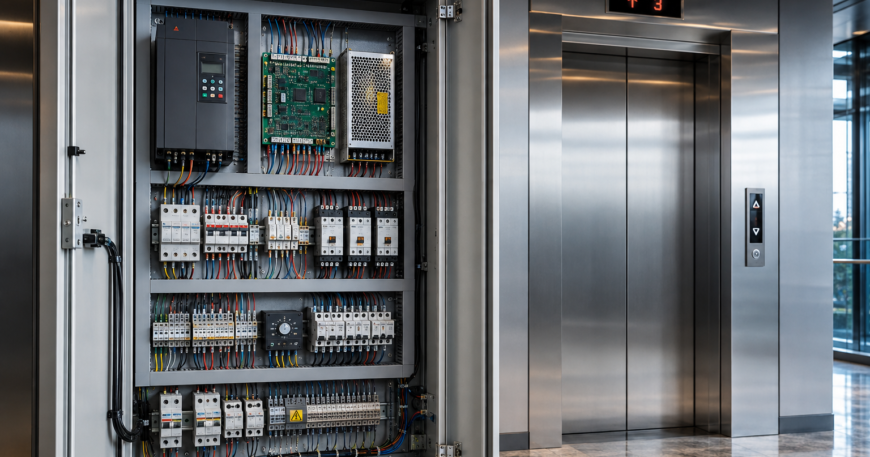
Elevators have become an essential part of modern residential, commercial, industrial, and high-rise buildings. Behind every smooth elevator journey is a sophisticated control system that manages movement, speed, door operation, safety functions, and communication between different electrical components. At the heart of this system is the elevator control panel.
An elevator control panel acts as the central control unit of an elevator system. It receives signals from buttons, sensors, safety devices, and other components, processes this information, and sends the appropriate commands to the elevator motor, doors, brakes, and other equipment.
With modern buildings demanding greater safety, energy efficiency, reliability, and comfort, high-quality elevator control panels have become more important than ever.
What Is an Elevator Control Panel?
An elevator control panel is an electrical control cabinet designed to manage and coordinate the operation of an elevator. It contains various electrical and electronic components that work together to control the elevator’s movement and safety.
The control panel receives inputs from different parts of the elevator system. For example, when a passenger presses a floor button, the signal is transmitted to the controller. The controller processes the request and determines how the elevator should respond.
It then communicates with the motor drive, door operator, sensors, brakes, and other components to complete the operation safely and efficiently.
In simple terms, an elevator control panel works like the brain of the elevator system.
How Do Elevator Control Panels Work?
The operation of an elevator control panel involves several coordinated steps. Although the technology can be complex, the basic working process can be understood easily.
1. Receiving Input Signals
The elevator control panel continuously receives signals from different devices. These can include:
- Car operating panel buttons
- Hall call buttons
- Door sensors
- Limit switches
- Position sensors
- Load and weight sensors
- Safety switches
- Emergency systems
These signals provide the controller with information about passenger requests and the current condition of the elevator.
2. Processing Information
Once the signals reach the control panel, the main controller or microprocessor processes them.
The controller determines which floor the elevator needs to travel to, whether the doors can close, what speed should be used, and whether all necessary safety conditions are satisfied.
Modern elevator controllers can process multiple signals simultaneously, allowing elevators to respond quickly to changing passenger demands.
3. Controlling Elevator Movement
After processing the information, the control panel sends commands to the elevator drive and motor.
A Variable Frequency Drive (VFD) can control the motor’s speed and acceleration. This allows the elevator to start smoothly, travel efficiently, slow down gradually, and stop accurately at the selected floor.
Proper coordination between the controller and drive system is important for achieving a comfortable passenger experience.
4. Controlling the Elevator Doors
The control panel also communicates with the door operator.
Before the elevator moves, the controller checks whether the doors are properly closed and whether the relevant safety circuits are active. During operation, sensors and door systems provide feedback to the controller.
This coordination helps prevent the elevator from operating when required safety conditions have not been met.
5. Monitoring Safety Systems
Safety is one of the most important functions of an elevator control system.
The control panel continuously monitors safety circuits and signals from devices such as door locks, limit switches, emergency systems, and other safety-related components.
If the system detects an unsafe condition, the controller can prevent normal operation and initiate the appropriate safety response according to the elevator system’s design.
Key Components of an Elevator Control Panel
A modern elevator control panel contains several components that work together to provide reliable operation.
Controller or Microprocessor
The controller is the central processing unit of the elevator control system. It receives information from different inputs, processes commands, and controls the elevator’s operation.
Variable Frequency Drive (VFD)
A VFD controls the speed and acceleration of the elevator motor. It can provide smoother starting and stopping while helping optimize motor operation.
Relays and Contactors
Relays and contactors are used to control electrical circuits and switch power to various components. Properly selected switching components contribute to dependable system operation.
Power Supply
The control panel requires stable electrical power for its controller, sensors, relays, communication systems, and other electronic components.
Safety Circuit
The safety circuit monitors important safety conditions throughout the elevator system. It is designed so that the elevator cannot operate normally when required safety conditions are not satisfied.
Terminal Blocks and Wiring
Organized terminal blocks and properly routed wiring provide reliable connections between the control panel and other elevator components.
Good wiring practices also make inspection, troubleshooting, and maintenance easier.
Why Are Elevator Control Panels Important?
The quality and design of an elevator control panel directly influence the overall performance of an elevator system.
1. Improved Safety
Safety is the primary consideration in elevator operation. A properly designed control panel continuously monitors important signals and coordinates safety-related functions.
2. Smooth Elevator Operation
Modern control systems can provide controlled acceleration, deceleration, and stopping. This helps create a smoother and more comfortable passenger experience.
3. Better Energy Efficiency
Advanced motor control technologies can help optimize elevator operation and reduce unnecessary energy consumption.
Energy-efficient control systems can be particularly valuable in buildings where elevators operate frequently throughout the day.
4. Accurate Floor Positioning
Modern controllers can work with position feedback systems to help the elevator stop accurately at the selected floor.
Accurate leveling is important for passenger comfort and accessibility.
5. Reduced Downtime
A well-designed elevator control panel can make system monitoring and troubleshooting more efficient.
Organized wiring, accessible components, and appropriate diagnostic features can help technicians identify problems and perform maintenance more effectively.
6. Improved Passenger Comfort
Passengers expect elevators to operate smoothly, quietly, and consistently. The controller and drive system work together to manage acceleration, speed, deceleration, and stopping.
This can significantly improve the overall ride experience.
Types of Elevator Control Panels
Different buildings and elevator applications require different control solutions. Common types include:
Geared Elevator Control Panels
These panels are designed for elevator systems using geared traction machines. They coordinate the motor, drive, safety systems, doors, and other components.
Gearless Elevator Control Panels
Gearless systems are commonly used in many modern high-rise and commercial applications. Their control panels are designed to work with gearless traction machines and advanced drive systems.
Hydraulic Elevator Control Panels
Hydraulic elevator control panels are designed for hydraulic elevator applications. They manage the hydraulic pump, valves, safety circuits, door operation, and related controls.
Automatic Elevator Control Panels
Automatic control systems can coordinate elevator calls and movement based on programmed logic, improving efficiency and reducing unnecessary operation.
Features of a Modern Elevator Control Panel
Today’s elevator control systems can incorporate a range of advanced features, depending on the application and controller design.
Some common features include:
- Microprocessor-based control
- VFD-based motor control
- Automatic door control
- Floor position monitoring
- Fault and diagnostic systems
- Safety circuit monitoring
- Emergency operation support
- Overload detection
- Adjustable acceleration and deceleration
- Energy-efficient operation
- Communication interfaces
- Easy maintenance and troubleshooting
These features allow elevator systems to deliver improved performance while meeting the operational requirements of modern buildings.
Choosing the Right Elevator Control Panel
Selecting the right elevator control panel requires consideration of several factors.
The panel should be compatible with the elevator motor, drive system, door operator, safety devices, and other electrical components. The building type, elevator capacity, travel speed, number of floors, operating frequency, and required features should also be considered.
Quality of components and wiring is equally important. A professionally engineered control panel should provide organized construction, reliable connections, appropriate protection, and easy access for maintenance.
Working with an experienced elevator control panel manufacturer can help ensure that the panel is properly designed for the specific elevator application.
Why Professional Elevator Control Solutions Matter
An elevator is a combination of mechanical, electrical, and electronic systems. The control panel must coordinate all of these systems accurately.
A professionally designed control panel can help improve reliability, simplify maintenance, support smooth operation, and provide appropriate monitoring of safety-related functions.
For building owners, elevator manufacturers, contractors, and maintenance professionals, choosing a dependable control-panel solution is therefore an important part of elevator system design.
Conclusion
Elevator control panels are the central intelligence behind modern elevator systems. They coordinate motor movement, door operation, safety circuits, floor positioning, sensors, and other components to deliver reliable elevator performance.
As buildings become taller, smarter, and more energy-conscious, the demand for advanced elevator control systems continues to grow. Modern control panels can combine intelligent controllers, VFD technology, safety monitoring, organized wiring, and diagnostic capabilities to create efficient and dependable elevator solutions.
For any elevator installation or modernization project, selecting a properly engineered and reliable control panel is essential. The right control system can contribute to smooth operation, improved efficiency, easier maintenance, and a better passenger experience.
At Windsor Controls, our focus is on developing reliable elevator control solutions designed around the specific requirements of modern elevator applications. From control panels and drive systems to organized electrical integration, choosing the right technology and engineering approach can make a significant difference in overall elevator performance.