



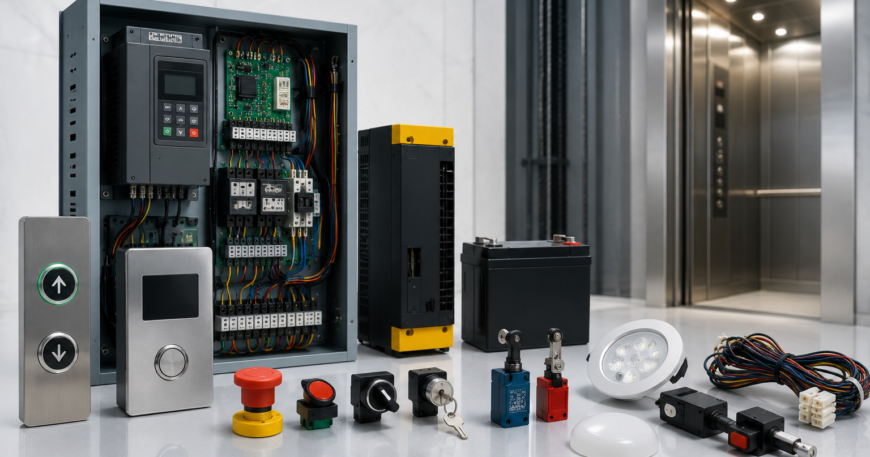
An elevator is a complex combination of mechanical, electrical, and electronic systems working together to transport passengers safely and efficiently. While the elevator cabin, motor, doors, and control panel are visible or familiar components, many smaller electrical devices play an equally important role behind the scenes.
From elevator switches and lighting systems to UPS units and safety circuits, every electrical component contributes to the reliable operation of a modern elevator. Proper selection, installation, and integration of these components are essential for smooth performance, passenger safety, and easier maintenance.
In this guide, we explore the most important elevator electrical components, their functions, and why they matter in modern elevator systems.
What Are Elevator Electrical Components?
Elevator electrical components are the devices responsible for controlling, powering, monitoring, protecting, and supporting elevator operation.
These components work together with the elevator controller, motor, drive, door operator, sensors, and safety systems.
Common elevator electrical components include:
- Elevator switches
- Push buttons
- Relays and contactors
- Elevator lighting
- Emergency lights
- UPS systems
- Safety switches
- Sensors
- Limit switches
- Door interlock systems
- Control panels
- Circuit protection devices
- Wiring harnesses
- Communication systems
Although each component performs a different function, they must operate together as part of a coordinated elevator control system.
1. Elevator Switches
Elevator switches are among the basic but essential electrical components used throughout an elevator system.
Different types of switches can be installed in the elevator cabin, machine area, shaft, control panel, and safety circuits.
Switches can be used to control electrical circuits, detect positions, monitor equipment conditions, or provide manual control during maintenance and emergency situations.
Common Types of Elevator Switches
Some commonly used switches include:
- Limit switches
- Safety switches
- Selector switches
- Door switches
- Emergency switches
- Maintenance switches
- Toggle switches
- Push-button switches
Why Elevator Switches Matter
A reliable switch provides accurate electrical signaling to the control system.
For example, a limit or position-related switch can provide information about the elevator’s movement or location. Safety-related switches can help the control system identify whether a particular condition has been satisfied.
The exact function and configuration depend on the elevator design and applicable safety requirements.
2. Elevator Push Buttons
Push buttons provide an important interface between passengers and the elevator control system.
When a passenger selects a floor, the button generates an electrical signal that is transmitted to the elevator controller.
Modern elevator push buttons can include:
- Floor selection buttons
- Door-open buttons
- Door-close buttons
- Alarm buttons
- Emergency buttons
- Call buttons
Buttons can be designed in different sizes, shapes, materials, and configurations depending on the elevator cabin design.
Clear labeling and reliable operation are important for passenger usability and accessibility.
3. Elevator Lighting Systems
Lighting is an essential part of elevator cabin design.
Adequate lighting helps passengers see clearly inside the elevator and contributes to a comfortable and welcoming environment.
Modern elevators commonly use LED lighting because LED systems can provide efficient illumination while consuming relatively little electrical power.
Common Elevator Lighting Applications
Elevator lighting can include:
- Cabin ceiling lights
- Control-panel illumination
- Indicator lighting
- Emergency lighting
- Shaft lighting
- Machine-room lighting
- Maintenance lighting
Lighting systems should be properly designed according to the elevator’s electrical requirements and applicable standards.
4. Emergency Elevator Lighting
Emergency lighting becomes particularly important during a power interruption.
If the building’s primary electrical supply fails, passengers should not be left in a completely dark elevator cabin.
An emergency lighting system can provide temporary illumination while the elevator’s emergency or backup power system operates.
Emergency lighting may be integrated with a battery backup or UPS system depending on the elevator design.
5. Elevator UPS Systems
A UPS (Uninterruptible Power Supply) provides backup electrical power to selected elevator electrical equipment when the main power supply is interrupted.
A UPS system typically includes a charger, batteries, inverter, and associated control and protection circuitry.
The exact loads supported by a UPS vary according to the elevator system design.
Depending on the application, backup power may support selected control, communication, lighting, or emergency functions.
Benefits of Elevator UPS Systems
A properly designed UPS system can provide:
- Backup power during interruptions
- Emergency lighting support
- Continued operation of selected control equipment
- Improved system availability
- Protection against certain power disturbances
- Support for emergency communication systems
It is important to select a UPS based on the actual load, required backup duration, battery capacity, and elevator system configuration.
6. Elevator Safety Systems
Safety is the highest priority in elevator design.
Modern elevators incorporate multiple safety devices and circuits designed to monitor operating conditions and prevent normal operation when required safety conditions are not satisfied.
The elevator control system continuously receives signals from safety-related components and responds according to its programmed logic and system design.
Common Elevator Safety Components
These may include:
- Door interlocks
- Safety switches
- Limit switches
- Overspeed-related devices
- Emergency stop circuits
- Door sensors
- Brake monitoring
- Load-related protection
- Position sensors
- Safety relays
These components work together with the elevator controller and other mechanical systems to support safe operation.
7. Door Interlock Systems
Elevator doors require reliable electrical and mechanical interlocking.
The elevator should only operate under the required door-closed and door-locked conditions.
Door interlock circuits provide the controller with information about the door’s status.
If the required interlock condition is not satisfied, the elevator control system can prevent normal movement according to the safety architecture of the elevator.
Reliable door interlock systems are therefore a critical part of elevator safety.
8. Relays and Contactors
Relays and contactors are widely used inside elevator control panels.
A relay allows a control signal to operate another electrical circuit, while contactors are commonly used for switching higher-power electrical loads.
These components can be used for controlling motors, brakes, lighting, fans, and other equipment depending on the control-panel design.
High-quality switching components can contribute to reliable elevator operation and easier maintenance.
9. Elevator Sensors
Sensors provide important information to the elevator controller.
Depending on the elevator design, sensors can monitor:
- Door position
- Elevator position
- Speed
- Load
- Motor conditions
- Floor position
- Mechanical conditions
The controller uses sensor information to make appropriate operating decisions.
For example, position feedback can help the control system determine when the elevator needs to slow down and approach a floor for accurate leveling.
10. Limit Switches
Limit switches are used to detect specific mechanical or positional conditions.
They can provide electrical signals when a moving component reaches a defined position.
In elevator systems, limit and terminal-related switches can be part of the movement monitoring and safety architecture.
Correct positioning and reliable operation of these switches are essential because they may interact with important control and safety functions.
11. Elevator Control Panels
The elevator control panel brings many of these electrical components together.
It contains the controller and other devices required to coordinate elevator operation.
The control panel can receive signals from:
- Landing buttons
- Cabin buttons
- Sensors
- Safety circuits
- Door systems
- Position devices
- Emergency systems
It then communicates with the elevator drive, motor, brake, door operator, and other equipment.
A well-designed control panel provides organized wiring, appropriate electrical protection, accessible components, and reliable connections.
12. Elevator Wiring and Harness Systems
Electrical components need reliable connections to communicate with the elevator controller and other equipment.
Elevator harness wiring provides organized electrical connections between different components.
A wiring harness can contain multiple wires, terminals, connectors, labels, and protective materials.
Using properly designed harnesses can help:
- Reduce wiring errors
- Improve installation efficiency
- Keep wiring organized
- Simplify troubleshooting
- Improve connection consistency
- Support easier maintenance
For complex elevator systems, organized wiring is especially important.
How These Components Work Together
The individual electrical components of an elevator cannot operate effectively in isolation.
For example, when a passenger presses a floor button, the signal reaches the elevator controller. The controller processes the request and communicates with the drive.
The drive controls the elevator motor while position sensors provide feedback. Door switches and interlocks provide information about door conditions. Safety circuits continuously monitor required conditions.
At the same time, lighting, communication, emergency systems, and other electrical components perform their respective functions.
This coordinated operation is what allows a modern elevator to provide reliable service.
Why Quality Elevator Electrical Components Matter
The quality of electrical components can have a direct impact on elevator reliability and maintenance.
Poor-quality switches, connectors, wiring, or protection devices may increase the risk of electrical faults and unnecessary downtime.
High-quality components selected according to the application’s requirements can help provide:
- Reliable electrical connections
- Consistent system performance
- Improved maintenance
- Better troubleshooting
- Longer service life
- Reduced unexpected downtime
However, component quality alone is not enough. Proper engineering, installation, testing, commissioning, and regular maintenance are equally important.
Choosing the Right Elevator Electrical Components
When selecting electrical components for an elevator project, several factors should be considered.
These include:
- Electrical ratings
- Elevator capacity
- Motor and drive specifications
- Environmental conditions
- Required safety functions
- Backup-power requirements
- Wiring configuration
- Installation space
- Maintenance requirements
- Applicable elevator standards and regulations
Components should be selected as part of the complete elevator system rather than individually without considering system compatibility.
Conclusion
Elevator electrical components are the foundation of a reliable and safe elevator control system. Switches provide important control and monitoring signals, lighting improves visibility and passenger comfort, UPS systems can provide backup power for selected functions, and safety devices continuously monitor critical operating conditions.
Control panels, drives, sensors, relays, contactors, wiring harnesses, door interlocks, and other electrical components work together to create a coordinated elevator system.
As elevator technology continues to develop, the demand for reliable, efficient, and intelligently integrated electrical solutions is increasing. Selecting the right components and integrating them correctly can help improve elevator performance, simplify maintenance, and support long-term reliability.
At Windsor Controls, properly engineered elevator electrical solutions can bring together control panels, drives, harness wiring, UPS systems, switches, and other electrical components according to the requirements of modern elevator applications.
A reliable elevator begins with reliable components—and every electrical connection plays an important role in keeping the system operating smoothly.